Sneakers, unlike watches or coins, are fundamentally perishable goods. They are constructed from organic materials like leather and suede, held together by chemical adhesives, and cushioned by polyurethane and EVA foams that inherently degrade over time. A collector's primary adversary is time, exacerbated by environmental factors.
Without proper intervention, icy translucent soles will oxidize to a dark, unappealing mustard yellow. Polyurethane midsoles will succumb to hydrolysis, crumbling into dust the moment you attempt to wear a ten-year-old deadstock pair. Preserving your investment requires a proactive, scientifically informed approach to storage.
The Enemies of Preservation
Understanding what degrades a sneaker allows you to mitigate the damage. The three primary culprits are light, moisture, and extreme temperature fluctuations.
- UV Light (Sunlight): Ultraviolet radiation accelerates the yellowing process of plastics and rubber (oxidation). It also bleaches the dye from suede and canvas panels. Sneakers should never be displayed in direct sunlight.
- Humidity and Moisture: High humidity environments promote mold growth on organic leathers and accelerate the breakdown of synthetic glues. Conversely, extremely arid environments can cause premium leathers to crack and stiffen.
- Temperature Swings: Keeping sneakers in an uninsulated garage or attic subjects them to seasonal temperature extremes. Expanding and contracting materials will quickly cause sole separation.
Optimal Storage Solutions
How you store your shoes depends on whether your goal is aesthetic display or maximum preservation for future resale.
The Original Box (OG Box)
For purists and investors, retaining the original cardboard box is mandatory, as it constitutes roughly 10-20% of the item's secondary market value. However, cardboard is acidic and attracts pests. If keeping shoes in their OG boxes, it is highly recommended to remove the factory tissue paper. Standard factory tissue is chemically treated and actually accelerates the yellowing of translucent rubber over time. Replace it with acid-free archival tissue paper.
Drop-Front Display Cases
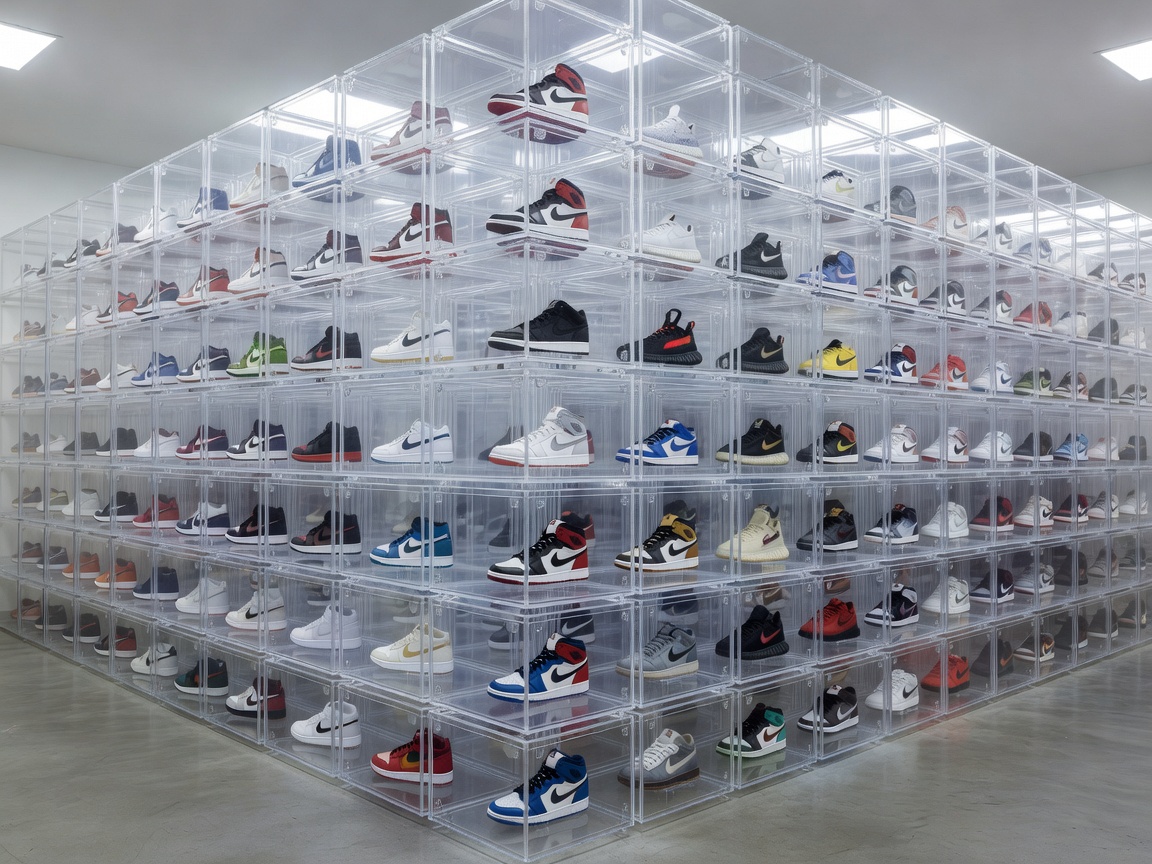
For those who wish to view their collection without unboxing every time, clear acrylic drop-front boxes have become the industry standard. These modular units interlock, allowing collectors to build structural walls of sneakers. They provide a barrier against dust and minor pest intrusion while offering easy access. Ensure the display boxes you purchase have UV-resistant coatings if they are placed in a room with windows.
Moisture Management: Silica Gel and Shrink Wrap
Regulating internal humidity is the secret to extending a sneaker's lifespan.
Silica Gel Packets: Placing one or two high-quality desiccant silica gel packets inside each shoe box absorbs excess ambient moisture, preventing mold and slowing hydrolysis. Be cautious: over-drying a shoe can lead to leather cracking, so do not overstuff a box with industrial desiccants.
Shrink Wrapping: The most aggressive preservation tactic utilized by hardcore collectors for vintage (pre-2005) pairs is shrink wrapping. By wrapping the shoe tightly in industrial plastic and using a heat gun to seal it, the collector completely cuts off oxygen and moisture exposure. This effectively halts oxidation in its tracks. However, this renders the shoe completely unwearable until unwrapped, making it a tactic strictly for museum-grade preservation rather than active rotation.
To Wear or Not To Wear?
A paradox exists in sneaker preservation regarding polyurethane (PU) midsoles, commonly found in vintage basketball shoes and runners. While storing a PU shoe perfectly will preserve its aesthetic, leaving it deadstock guarantees it will crumble under the weight of a human foot a decade later. This is due to hydrolysis, where water molecules break the chemical bonds in the foam.
Surprisingly, wearing the shoe occasionally (once every few months) compresses the foam, pushing out stagnant moisture and keeping the structural bonds flexible. Therefore, if you intend to wear a grail from 10 years ago, it is better to buy a slightly worn pair than a deadstock pair that will disintegrate on your first step.
Conclusion
Preservation is an active commitment. Climate control, acid-free paper, silica gels, and UV avoidance form the cornerstone of proper sneaker storage. Treat your collection with the same respect archivers treat historical documents, and your pairs will remain pristine for decades.